The products and services mentioned in this article may not be available in your region. Please reach out to customer support or your account manager if you have questions.
10 types of sales promotions every business should run

There’s a simple reason that businesses have been running sales promotions since the late 1800s: they work.
Aggregated research shows that when brands use discount marketing strategies, consumers experiment with first-time purchases, spend more money and develop brand loyalty.
This article will cover 10 types of sales promotions that positively influence purchasing behaviours. More specifically, we’ll address:
What is a sales promotion?
A sales promotion is a marketing strategy where companies offer temporary promotions to boost sales or product interest.
A popular sales promotion across industries is the BOGO (buy one, get one free) deal. If you’ve ordered from a restaurant and seen a deal like ‘Buy one side dish, get a second side dish free’, that’s a BOGO deal.
Other types of sales promotions help you incentivise your customers to make quick buying decisions, add more items to their orders and pick your store over your competitors (more on this below).
Why you should offer sales promotions
Today’s consumers shop across several channels, including in person, on your website, through your app and on third-party delivery platforms like Uber Eats.
It’s important to develop a promotion strategy for each channel that meets customers’ needs and encourages them to keep purchasing. If you do this successfully, you can experience some additional benefits, including:
Short-term sales: Offering deals, especially when they’re time-bound or only available for a limited window, encourages your customers to purchase more and try something new.
Inventory management: A custom promotion that allows customers to save on specific product categories or items can help you move excess inventory and reduce holding costs.
New customers: A RetailMeNot study found that two-thirds of customers have made an unplanned purchase after finding an offer. It also found that 80% of consumers said finding an enticing offer encourages them to make a first-time purchase. Deals and offers are a reliable way to capture new customers.
Customer loyalty: Fifty-three percent of consumers say dependable offers from a brand influence their customer loyalty, according to research by Khoros.
Market visibility: Have you opened a third-party app like Uber Eats and seen an exciting promotion you weren’t expecting? Even if customers don’t order from you right then, your business is top of mind every time a customer sees one of your sales promotions.
Product trials: Along the same lines, when you reduce spending risk through offers and freebies, you encourage customers who are on the fence to try something new from your store.
Competitive differentiation: Imagine that a customer is scrolling on an app like Uber Eats to decide where to order from. If they see that your business is offering an enticing promotion, they may be more likely to select your storefront over one that isn’t.
Increased average order value (AOV): Promotions open the door to cross-selling and upselling opportunities, helping you boost each transaction's AOV.
Reviving interest: Remember how McDonald’s has retired and then brought back the McRib over the years? By creating limited-time offers around this product, it revitalises interest in both the McRib and McDonald’s.
Test new customer segments: Promotions are low-risk ways to test consumer response in new markets or demographics. This gives you the information you need to make bigger business decisions to meet your customers’ needs.
10 types of sales promotions to try
The world of sales promotions is vast and can be tailored to your business’s unique goals and marketing strategies across all channels.
And, with the rise in popularity of delivery in particular, many sophisticated marketing tools now help businesses reap the benefits of these tested promotion strategies.
Let's get into some of the top sales promotions you can experiment with across channels. It’s also worth noting that many of these tactics are available through in-app marketing tools on Uber Eats.
1. BOGO (buy one, get one)
A BOGO deal is a type of sales promotion where customers purchase one item and receive a free or reduced item in return.
You can get creative with a BOGO offer and structure it as any variation of ‘Buy X amount, get X amount free’ or ‘Buy X amount, get a reduced item’.
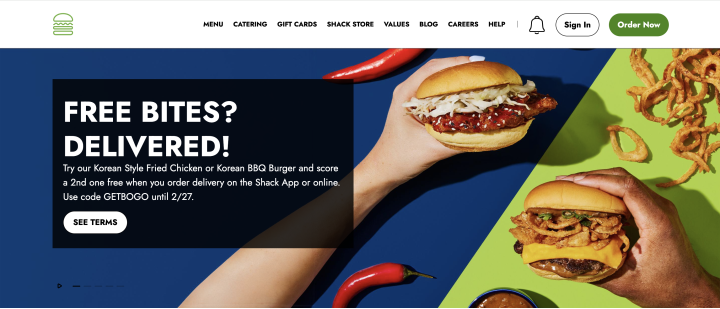
Shake Shack runs BOGO promotions for customers in locations all over the world. Here’s a recent example where customers can order a Korean Style Fried Chicken or Korean BBQ Burger directly from the Shake Shack website and get one free.
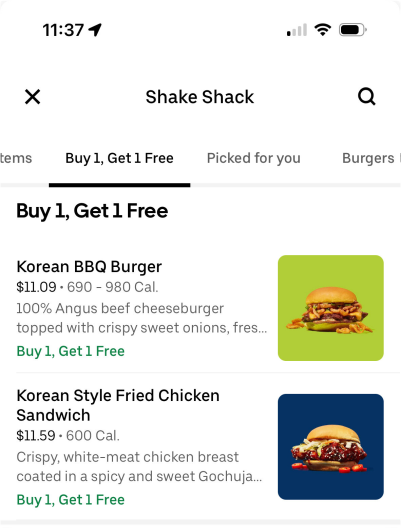
Shake Shack also receives orders online through Uber Eats, and the business has set up the same BOGO promotion on the app. This way, no matter where someone places an order – on Shake Shack’s own sales channels or on Uber Eats – they have access to the same deal. This is a powerful way to build a unified brand experience across channels.
Remember, you don’t have to be a large global restaurant brand like Shake Shack to experience success with BOGO promotions. Sansotei Ramen started small by running sales offers on Uber Eats, and the ramen chain now has 19 locations across Canada.
Sansotei Ramen owner Michael Zhang said his customers respond well to the restaurant’s BOGO deals and that customer acquisition numbers on Uber Eats rose 28% in the first half of 2023 alone.
BOGO promos are historically promising – they can increase sales volume and help with customer acquisition. If you’re partnering with Uber Eats, navigate to the Marketing tab in your Uber Eats Manager dashboard to give this offer type a try.
2. Bundles
Bundling, or the ‘bundle and save’ promotion, is when you offer products or services together at a reduced price compared with buying each item individually.
This sales strategy encourages customers to purchase more by showcasing the value and convenience of buying a set of complementary items. It’s especially effective for restaurants, where customers combine different menu items to create a complete meal.
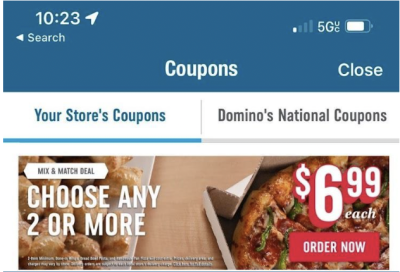
Domino’s Pizza, for example, increases its overall average order size with ‘bundle and save’ deals where customers purchase 2 or more items and get a reduced price on both items. Here’s an example of how Domino’s customers who order 2 items can get both for $6.99 each.
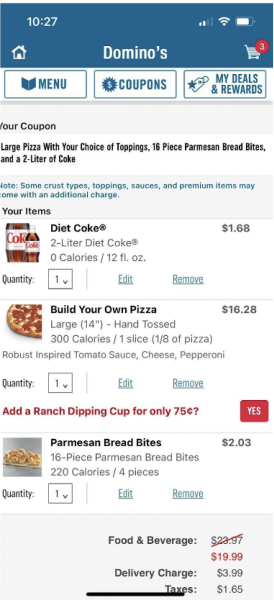
Similarly, Domino’s offers a full meal bundle where customers can order a large pizza, 16-piece Parmesan Bread Bites and a 2-litre beverage for a reduced price of $19.99 – 16% less than if they ordered each item individually.
3. Coupons
If you’re an avid consumer, you see coupons for offers on specific items every day.
But have you seen what’s thought to be the first coupon distributed in the United States? Around 1887, Coca-Cola distributed the first ‘ticket’ for a free glass of Coke. Sources say the now-ubiquitous company redeemed 8.5 million coupons by 1913. And look at Coke now!
While you can go the 1800s Coca-Cola route and distribute physical coupons, 57% of consumers in 2023 reported that they prefer digital coupons.
Digital coupons function the same way that physical coupons do: they offer a barcode or promo code that customers can use to save money on a purchase. For example, if a customer makes an online account with a brand for the first time but doesn’t make a purchase, the company may send them a code over email (for example, ‘FIRSTTIMER’), which they can enter at checkout to receive a perk, like a discount on their order or free delivery.
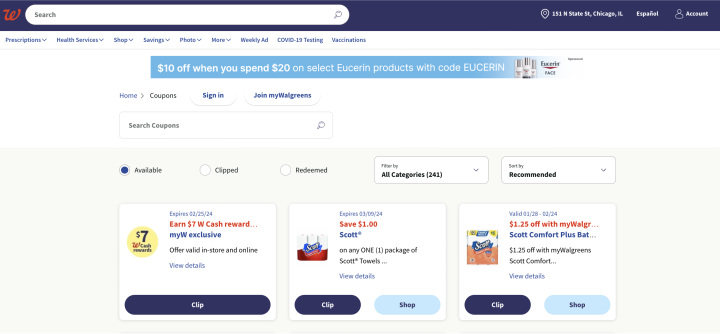
Below is an example of how Walgreens uses digital coupons to incentivise buying behaviour. Walgreens customers can sign in to their online account at any time to browse their coupon options. From the coupons page, they can see their available, clipped and redeemed coupons.
4. Free delivery and returns
Sometimes customers hesitate to complete a purchase when they see the cost of delivery or return fees.
In 2023 research from Uber, 81% of consumers agreed that if they’re spending a lot on items, they don’t expect to have to pay extra for express delivery.
A good way to address this concern is to eliminate these fees entirely. Instead of requiring customers to pay for delivery, you can sweeten the deal by running a free delivery promotion.
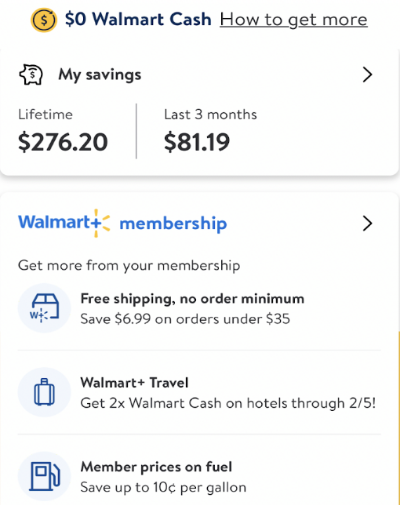
If you can’t offer free delivery, remember that it’s often the surprise element of delivery fees that hinder a sale. A workaround is to do what Walmart does. Offer sort of free delivery – and be transparent about it. In other words, you can provide free delivery to elite members who agree to pay a yearly or monthly subscription fee. Walmart+ members pay a small fee in exchange for convenient benefits, including free shipping.
Another workaround is to provide free shipping delivery when an order exceeds a certain amount. This ensures that part of the sale can presumably cover the cost of delivery.
5. Free item with purchase or minimum order size
Everyone loves a freebie. Consider attracting new customers with a ‘free item with a purchase’ or ‘free item with a minimum order size’ promotion.
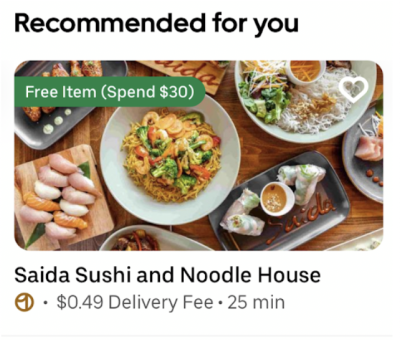
Saida Sushi and Noodle House runs this type of promotion on Uber Eats. When customers spend at least $30, the restaurant offers them a free item. This is a powerful way to increase the average order value of every transaction – and fill the bellies of your customers.
6. Loyalty programs
There are some restaurants we visit regularly. Why? For one, they’re delicious and we can’t get enough. But the second reason? They incentivise consumers to come back with loyalty programs that make repeat visits hard to resist.
Starbucks Rewards is an example of a strong loyalty program. Members earn stars for purchases, which they can redeem for free food and beverages. Participants also enjoy exclusive perks such as free birthday treats, personalised offers (which boosts AOV), mobile ordering and in-app payments.
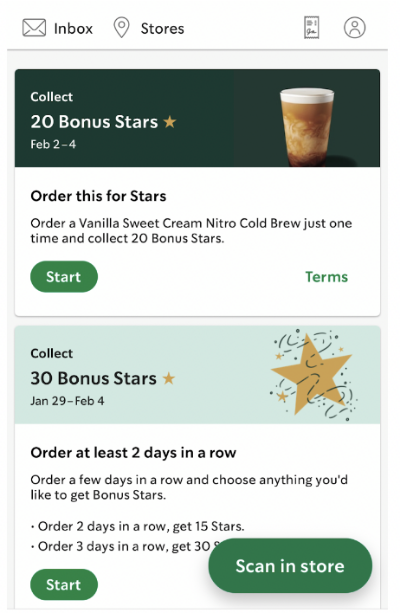
The best part of designing a loyalty program like Starbucks Rewards? Steady growth.
Aggregated research shows that Starbucks Rewards has averaged 16% year-over-year growth and that rewards members are 5.6 times more likely to visit Starbucks daily than non-members.
The same aggregated research shows that Starbucks also has a much higher customer retention rate (44%) than the rest of the coffee store industry (25%) due to its rewards program.
7. Save on menu items or categories
Have you ever wanted to introduce your customers to an awesome new product? Running a promotion where customers can save on select items or categories can help draw their attention to either new or less-popular offerings.
Taqueria El Patron Mexican Grill uses this promotion strategically with its ‘Save on select items’ deal on Uber Eats.
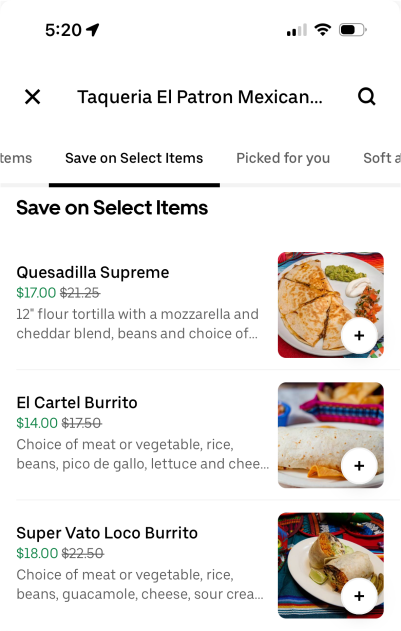
When Uber Eats users land on the Taqueria El Patron Mexican Grill page, they can choose Save on Select Items and get reduced prices on items like the Quesadilla Supreme, El Cartel Burrito and Super Vato Loco Burrito.
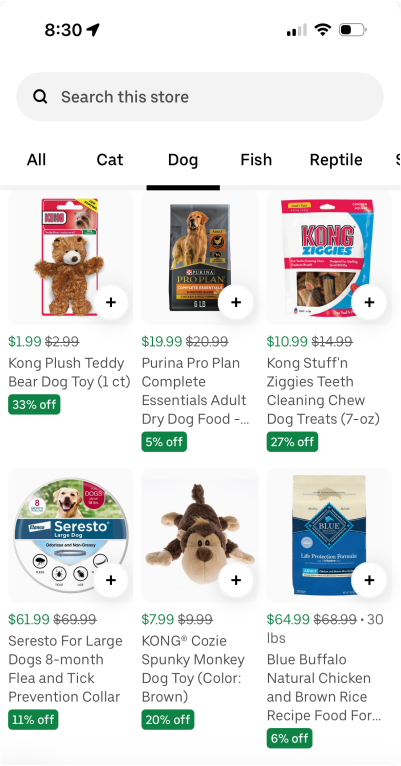
Petco does this as well. It breaks down savings into categories including Cat, Dog, Fish and Reptile. So if you have a dog, you can select the Dog category and see what percentage off you can get on dog-related items.
8. Spend X, save Y
A ‘Spend X, save Y’ or ‘Buy X, save Y’ promotion is a strategy that brands use to incentivise customers to spend a certain amount or buy a specific quantity of items to save money.
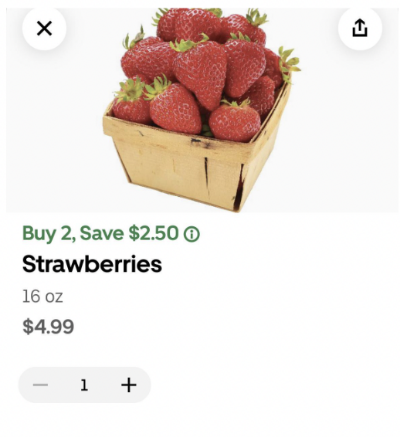
Sprouts Farmers Market implements this strategy on the Uber Eats app by offering deals like ‘Buy 2, save $2.50’ on strawberries. This is a great idea, considering strawberries have a short shelf life.
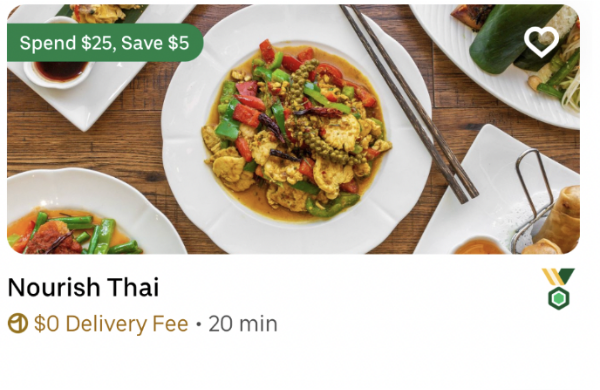
And the restaurant Nourish Thai offers a ‘Spend $25, save $5’ deal to its customers. These savings-based deals motivate customers to purchase more than they might have initially planned, boosting sales volume in the process.
9. Rebates or cash back
Rebates or cashback promotions are a clever twist on traditional offers and can work wonders to encourage repeat business.
Instead of upfront price reductions, customers receive a portion of their spending back as store credit or points – in the same way credit card companies incentivise users.
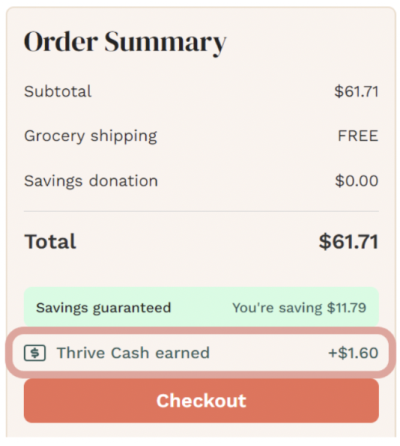
Thrive Market boosts customer loyalty with its Thrive Cash program that lives on the Thrive Market native website and app.
Customers can sign in to the website or app and earn Thrive Cash by referring friends, reviewing products and purchasing specific brands. This earned cash is then automatically applied to their next purchase at checkout, incentivising customers to return and shop again. Thrive Cash has an expiry date, and it’s only redeemable on merchandise. This tactic creates a sense of urgency for customers to keep shopping so they don’t lose their rewards.
10. Storewide sales
During storewide sales, businesses offer discounts – either as a percentage off or a set dollar amount – on a wide range of products throughout the store.
Storewide sales include holiday sales, end-of-season sales, anniversary sales, back-to-school sales, friends and family sales, and flash sales. All of these sales types are characterised by their limited duration and significant offers.
Plus, some businesses offer special offers for specific groups of people, such as seniors, students or military personnel. These targeted offers show appreciation and cater to the needs of these communities.
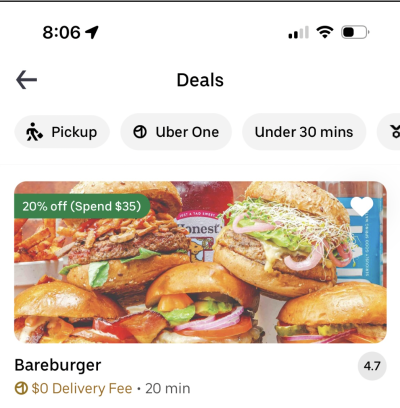
On the Uber Eats app, businesses can offer a digital storewide sale as a percentage off an entire order if a customer hits a specific spending threshold. Bareburger does this by offering 20% off if customers spend $35 or more.
How to drive sales with in-app marketing tools on Uber Eats
It’s a tale as old as time: Consumers are willing to try new stores, spend more money in one sitting and come back for more when a promotion is involved.
With in-app marketing tools on Uber Eats, the process of launching sales promotions is made easy.
If you’re a restaurant operator, you have the option of choosing from a range of sales promotions in Uber Eats Manager, your all-purpose dashboard for managing and optimising your business on the platform. These include:
- $0 Delivery Fee. Customers enjoy no Delivery Fee with a minimum order size.
- Buy one, get one (BOGO). Customers buy a specified item, get another of the same specified item for free.
- Free item with minimum order size. Customers unlock a free menu item with a minimum amount spent.
- Percent off. Customers receive a percentage off an entire order with a minimum order size.
- Save on items or categories. Customers select from items or categories that have been reduced in price.
- Spend X, save Y. Customers get a dollar amount reduced from an order with a minimum spending threshold.
If you’re a grocery operator or retailer, you’ll have the option of offering a range of promotions in your online catalogue during the onboarding process. These include:
- BOGO and buy X, get Y. Customers buy a certain count of one item, then get a certain count of the same item for free.
- Buy X, save Y. Customers buy a specified count of one item and get a dollar amount off.
- Save on items or categories. Customers select from items or categories that have been reduced in price.
With Uber Eats, it’s easy to create offers that will delight your customers. Either sign in to your Uber Eats Manager dashboard and navigate to the Marketing tab or speak to your account manager to get started. If you’re new to Uber’s delivery solutions, learn more about products and services designed to take your business further.
Services
Services
Technology
Manage orders
Simplify operations
Grow your sales
Reach customers
Who we serve
Who we serve
Pricing
Resources
Learn more
Customer hub
Merchant store
Contact us